
Benefits of Using a Capo
For many senior guitarists, the biggest challenge isn’t learning new songs — it’s playing comfortably. Stiff fingers, reduced strength, arthritis, or hand pain can make once-easy chords feel frustrating. One simple, inexpensive tool can make a surprising difference: the capo.
A capo isn’t just for changing keys or playing along with singers. Used thoughtfully, it can make the guitar easier on your hands, reduce strain, and help you enjoy playing longer.
Capos are not expensive. Amazon is a solid buy but many of the other sites also list the same price. USD $5 – $20 for a basic capo (The $5 capos work ok, I’ve had them but recommend higher quality) I think I paid $9 for last one I bought. Check out the ACCESORIES page

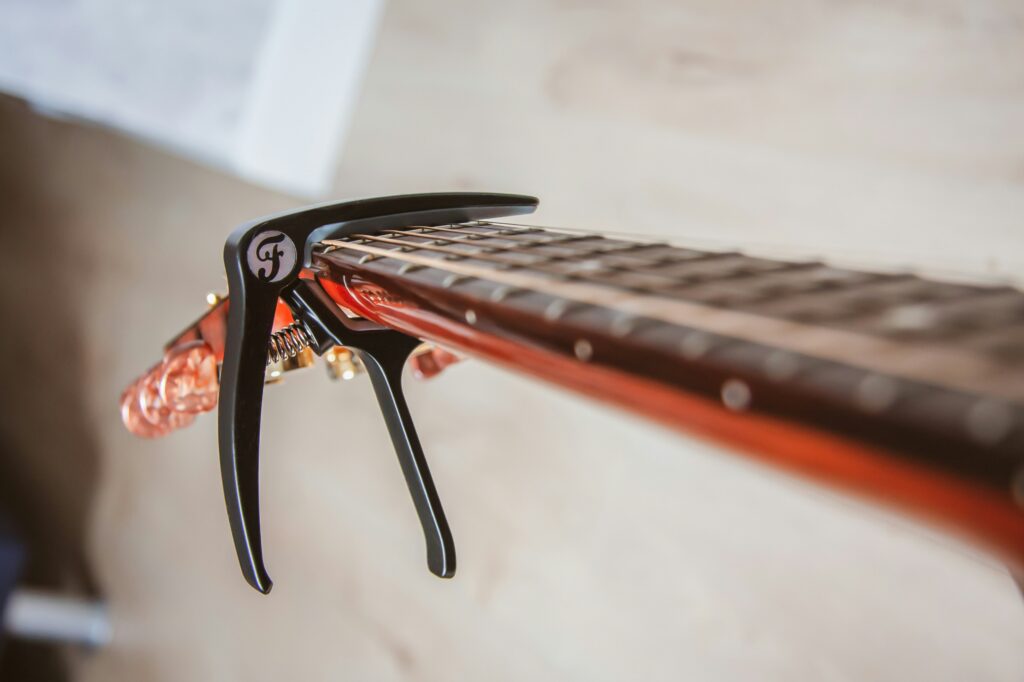
If your guitar feels hard to press near the nut, placing a capo at the second or third fret can immediately make the instrument feel more manageable — without modifying the guitar itself.
1. A Capo Effectively Lowers the Action
One of the most overlooked benefits of using a capo is that it lowers the effective action of your guitar.
Action refers to how high the strings sit above the frets.
Higher action requires more finger pressure to press notes cleanly.
With a capo placed higher up the neck, the strings are naturally closer to the frets.
For senior players, this means:
Less finger pressure needed
Cleaner chords with less effort
Reduced fatigue and discomfort
2. Less Stretching for Aging Hands
Many common open chords require wide finger stretches near the nut, where frets are farther apart. As hands age, stretching can become uncomfortable or even painful.
Using a capo:
Moves chord shapes higher up the neck
Brings frets closer together
Reduces finger spread
This is especially helpful for:
F and barre-style shapes
Chords with large finger gaps
Players with reduced flexibility or arthritis
Both of these videos clearly illustrate pretty much everything you need to know about a capo
Less pressure often leads to cleaner sound, too — especially when fingers are tired.
3. Reduced Finger Pressure and Joint Strain
Even small reductions in pressure can make a big difference over time.
A capo helps by:
Allowing lighter fretting pressure
Reducing joint compression
Making sustained playing more comfortable
This is important for senior guitarists who may experience:
Sore knuckles
Finger joint stiffness
Loss of grip strength
4. Makes Familiar Chords Easier by Changing the Key
One of the most useful benefits of a capo is that it changes the key of the song without forcing you to learn new chord shapes. Technically, this is called transposing, but you don’t need to think about the theory to benefit from it.
By placing a capo on the neck, you can:
Use familiar open chord shapes
Play songs in higher or more comfortable keys
Avoid difficult barre chords
Reduce hand strain and finger pressure
For example, instead of playing a song in a key that requires painful barre chords, you can move the capo and play the same song using easier shapes. The music sounds higher, but your hands do less work.
This allows senior guitarists to:
Focus on playing comfortably
Keep enjoying familiar chord shapes
Play songs that might otherwise feel out of reach
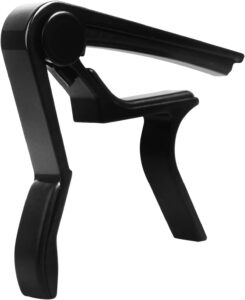
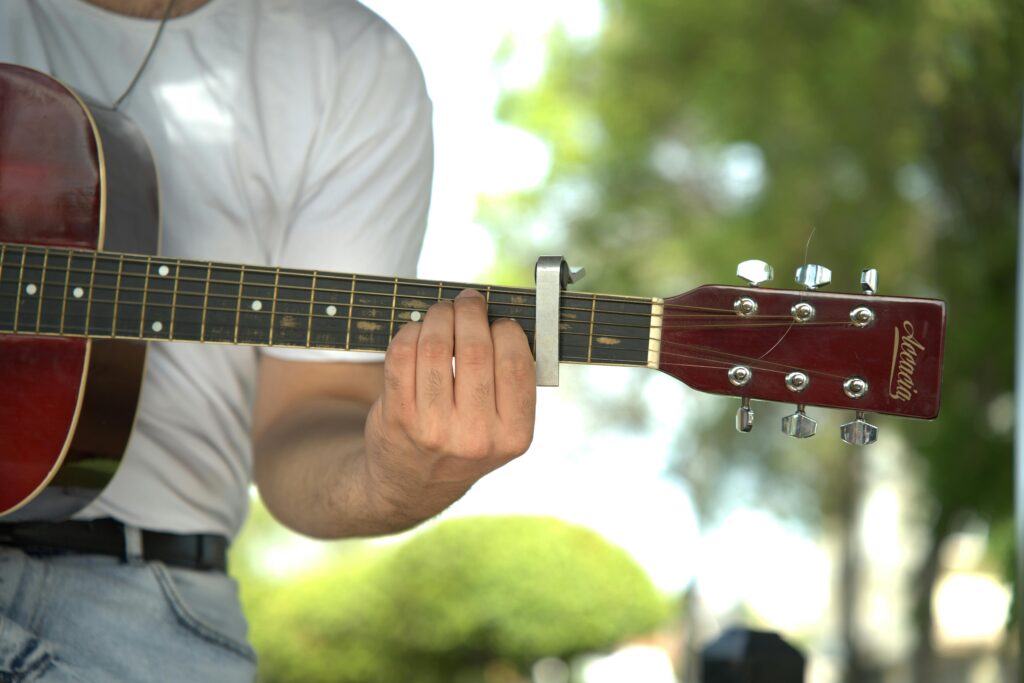
In short, a capo lets you change the key to suit your hands, not the other way around.
Comfort supports consistency — and consistency keeps music fun.
5. Encourages Longer, More Enjoyable Practice Sessions
When playing feels easier, you naturally want to play more.
A capo can help:
Reduce early fatigue
Prevent soreness after short sessions
Build confidence
For many seniors, this means the difference between:
Putting the guitar away early
Or enjoying a relaxed, satisfying practice session
6. A Non-Permanent, Low-Cost Solution
Unlike:
Neck adjustments
Fret work
String changes
A capo:
Is inexpensive
Requires no tools
Can be used or removed instantly
It’s a low-risk way to experiment with comfort improvements before making permanent changes to your guitar.
Comfort should always come first.
7. Choosing and Using a Capo Comfortably
A few senior-friendly tips:
Use a capo with adjustable tension if possible
Avoid over-tightening — more pressure than needed defeats the purpose
Start at the second fret and adjust by feel
Listen for clean notes rather than forcing pressure